



CA VI
Carbonic anhydrase VI (CA VI) is a zinc-dependent enzyme that catalyzes the reversible hydration of carbon dioxide and is the only secreted isoform within the human α-carbonic anhydrase family[1][2]. CA VI is produced primarily by serous acinar cells of the salivary and mammary glands and is secreted into saliva and milk, where it contributes to extracellular acid-base regulation and surface homeostasis[1]. Mechanistically, CA VI participates in pH regulation by accelerating the conversion of carbon dioxide and bicarbonate, thereby supporting buffering processes on oral and upper alimentary tract surfaces[1][3]. This activity is closely linked to maintenance of the enamel pellicle and protection against excessive acid exposure in the oral cavity and gastrointestinal mucosa[1][4]. Disease-associated studies have reported that reduced salivary CA VI levels are associated with increased prevalence of dental caries and acid-related epithelial disorders, supporting its relevance as a biomarker and functional component of mucosal defense[1][4]. Compared with other carbonic anhydrase isoforms, CA VI is distinguished by its extracellular secretion and unique C-terminal structural features, whereas most related α-carbonic anhydrases function as intracellular, membrane-associated, or mitochondrial enzymes[2]. Structural characterization further demonstrated that human CA VI forms oligomeric assemblies and remains susceptible to inhibition by the classical carbonic anhydrase inhibitor acetazolamide, making it a useful experimental model for investigating extracellular carbonic anhydrase biology and inhibitor interactions[2][5].
Verweise:
- [1]. Karhumaa P, et al. The identification of secreted carbonic anhydrase VI as a constitutive glycoprotein of human and rat milk. Proc Natl Acad Sci U S A. 2001 Sep 25;98(20):11604-8. [Content Brief]
- [2]. Yrjänäinen A, et al. Biochemical and Biophysical Characterization of Carbonic Anhydrase VI from Human Milk and Saliva. Protein J. 2022 Oct;41(4-5):489-503. [Content Brief]
- [3]. Kivela J, et al. Salivary carbonic anhydrase isoenzyme VI. J Physiol. 1999 Oct 15;520 Pt 2(Pt 2):315-20. [Content Brief]
- [4]. Kazokaitė J, et al. Engineered Carbonic Anhydrase VI-Mimic Enzyme Switched the Structure and Affinities of Inhibitors. Sci Rep. 2019 Sep 3;9(1):12710. [Content Brief]
- [5]. Yrjänäinen A, et al. Biochemical and Biophysical Characterization of Carbonic Anhydrase VI from Human Milk and Saliva. Protein J. 2022;41(4-5):489-503.
All Product Categories
-
CA VI Verwandte Produkte (2)
Verwandte Produkte (2)

-
Elsulfavirine
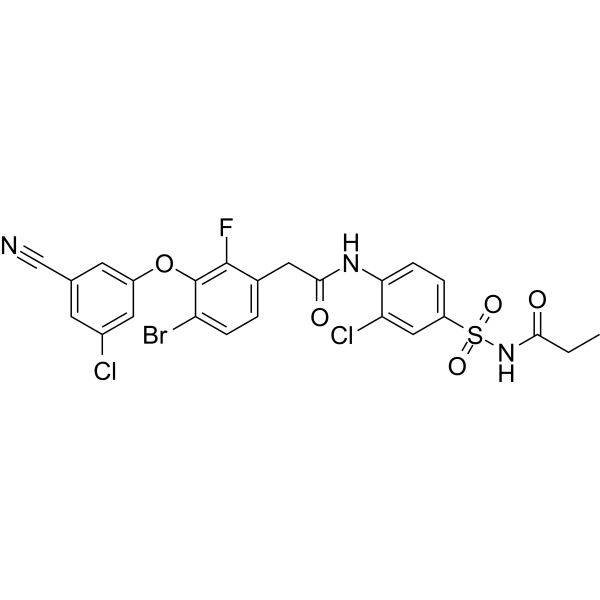 0 ImagesSynonyms: R-1206Elsulfavirine (R-1206) is an orally active human carbonic anhydrase (carbonic anhydrase, CA) inhibitor and an allosteric inhibitor of HIV-1 non-nucleoside reverse transcriptase (NNRT). Elsulfavirine also targets and blocks the interaction between adenylosuccinate lyase (ADSL) and insulin-induced gene proteins INSIG1/2, blocks SREBP-1-mediated de novo lipid synthesis, and inhibits the proliferation of liver cancer cells. The combination of Elsulfavirine and Lenvatinib (HY-10981) produces a synergistic anti-tumor effect. Elsulfavirine is converted into the active metabolite VM1500A in vivo, blocks the DNA polymerase activity of reverse transcriptase, and inhibits HIV-1 replication. Elsulfavirine exhibits a Ki of 1960 nM-52400 nM against human carbonic anhydrase isoforms including I, VII, VI, VA, VB, IX, XIII, XIV. Elsulfavirine is used in studies related to HIV-1 infection and liver cancer.
-
Elsulfavirine sodium
 0 ImagesArt. -Nr.: HY-109056ACAS. Nr.: 867365-40-0Synonyms: R-1206 sodiumElsulfavirine sodium (R-1206) is an orally active human carbonic anhydrase (carbonic anhydrase, CA) inhibitor and an allosteric inhibitor of HIV-1 non-nucleoside reverse transcriptase (NNRT). Elsulfavirine sodium also targets and blocks the interaction between adenylosuccinate lyase (ADSL) and insulin-induced gene proteins INSIG1/2, blocks SREBP-1-mediated de novo lipid synthesis, and inhibits the proliferation of liver cancer cells. The combination of Elsulfavirine sodium and Lenvatinib (HY-10981) produces a synergistic anti-tumor effect. Elsulfavirine sodium is converted into the active metabolite VM1500A in vivo, blocks the DNA polymerase activity of reverse transcriptase, and inhibits HIV-1 replication. Elsulfavirine sodium exhibits a Ki of 1960 nM-52400 nM against human carbonic anhydrase isoforms including I, VII, VI, VA, VB, IX, XIII, XIV. Elsulfavirine sodium is used in studies related to HIV-1 infection and liver cancer.



